
The Allure of Holiday Park Homes
Affordable Coastal Living
The South African coastline runs for thousands of kilometres, yet your average holiday week involves packing a car until the boot refuses to close and fighting for parking. Holiday park homes South Africa present a cheaper, saner route. These homes offer coastal living without the bond that requires a second career. You buy the structure, rent the land, and wake up to sea air instead of traffic noise.
The appeal goes beyond price. Consider what you actually get:
- Proximity to beaches and tidal pools
- Secure estates with managed facilities
- A community that shares your fondness for seaside mornings
Your neighbours might be retirees who wave with unnecessary vigour, but that beats hearing your landlord’s footsteps. This model turns a distant wish into a weekend reality, and that is worth a few eccentric waves!
Escape to Nature and Tranquility
The estate boundary ends at a line of pines. Beyond them, the reserve stretches into darkness. The quiet inside holiday park homes south africa is different from the quiet outside. It is deeper, more deliberate. I have stood on a veranda here as the fog rolled in, and the silence did not feel empty. It felt necessary.
Mornings begin with mist. The grass holds dew until midday. Bird calls echo from the treeline, and the only other sound is your own breathing. For those who choose holiday park homes south africa, this replaces the morning traffic report.
A typical day here involves:
– walking the perimeter path at dawn
– sitting on the veranda as the fog lifts
– listening to the wind move through the canopy
The evenings bring a different kind of stillness. Lights come on in the neighbouring homes, one by one, in sequence. The night air carries the scent of damp soil and leaves. This is nature, unmediated by traffic or screens. You do not visit this place to be entertained. You visit to remember what silence sounds like.
A Growing South African Trend
Ask any park home owner why they switched and you will hear the same phrase: they wanted a second home, not a second job. Holiday park homes south africa deliver exactly that, and the market is responding. Sales across the Western Cape and KwaZulu-Natal have grown steadily as buyers find the numbers add up.
The appeal rests on practical factors:
- Purchase prices significantly below freehold coastal property
- Shared infrastructure costs that cover security and amenities
- Flexible rental options when the home is not in use
I have toured parks in both provinces and noticed the same pattern among owners. They visit more often because the home is ready when they arrive. No maintenance backlog, no contractors to chase. Their holiday park homes south africa simply work, week after week!
Investment Potential and Asset Value
A well positioned park home in the Western Cape can deliver net rental yields of 8% to 10%, outperforming many coastal apartments. That is the kind of return that shifts how you evaluate holiday park homes south africa. The real asset value sits in the ownership structure. Shared land and common infrastructure lower your capital exposure while preserving long term appreciation.
Coastal freehold values swing with market sentiment. holiday park homes south africa, by contrast, hold steady occupancy because they serve both lifestyle and rental markets. That dual use supports consistent asset value, even during slower economic cycles.
- Leasehold tenure with predictable monthly levies
- Rental income streams that offset ownership costs
- Depreciation rates that stabilise after the first few years
Owners treat their park home as a financial asset, not a speculative bet. The capital works through use, not just resale.
Prime Locations for Holiday Park Homes
Western Cape Coastal Gems
Most visitors to the Western Cape never reach its finest stretches of shoreline. The real treasures sit further up the coast, and a handful of holiday park homes south africa occupy the choice spots among them.
Arniston, known locally as Waenhuiskrans, offers limestone cliffs and sea caves that change with every tide. Stilbaai has protected lagoons and winter visits from southern right whales. Paternoster draws loyal visitors for its kelp forests and wood fired bakeries.
- Arniston for dramatic geology and lagoon paddling
- Stilbaai for calm swimming and whale watching
- Paternoster for fresh seafood and coastal walks
These settlements rarely feature in travel brochures, yet they define the enduring appeal of a coastal retreat.
Garden Route Hideaways
The Garden Route stretches roughly 200 kilometres between Mossel Bay and Storms River. Most of it remains untouched forest and fynbos, which is why holiday park homes south africa are so scarce in this region. Scarcity alone makes these portions valuable, and I have watched buyers move quickly when one becomes available.
Sedgefield sits at the centre, where the Goukamma River meets the sea. The plots here are low and sandy, with milkwood trees offering natural privacy. Knysna and Plettenberg Bay mark the eastern end with deeper water and livelier marinas. Certain spots stand out:
- Sedgefield for uninterrupted beach access
- Wilderness for its lagoon and canoe trails
- Nature’s Valley for its setting inside the Tsitsikamma reserve
Each of these locations offers its own version of the Garden Route, and none of them feel crowded!
KwaZulu-Natal Favourites
KwaZulu-Natal’s coastline hums with a different energy, one shaped by warm Indian Ocean swells and dense coastal forests. Holiday park homes south africa in this province sit near thriving sugar cane towns and laid-back fishing villages, giving owners a season that never really ends. The winter sun stays generous, and the sea remains swimmable for most of the year.
My personal favourites cluster around the north coast, where the lifestyle feels both unhurried and connected. Consider these established spots:
- Ballito, with its shark-netted beaches and busy weekend markets
- Salt Rock, quieter and greener, perfect for long tidal pool mornings
- St Lucia, a UNESCO wetland where hippos graze close to the plots
Each location offers distinct character, yet all share that subtropical ease of living that draws people back time and again.
Bushveld Retreats and Game Reserves
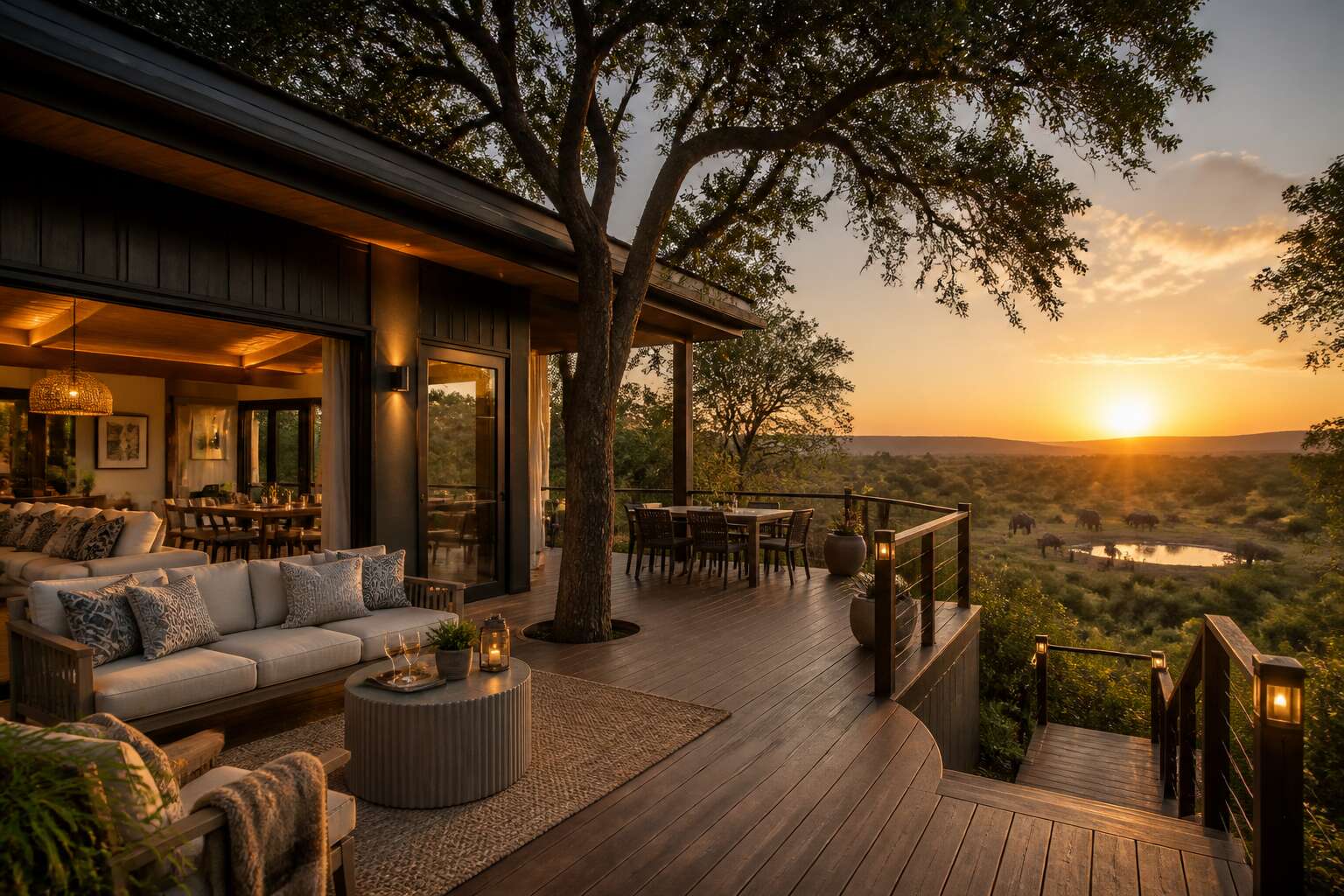
The bushveld demands a different kind of ownership. Here, holiday park homes South Africa shift from coastal light to open skies, where the horizon stretches beyond fences and the night air carries jackal calls instead of traffic noise. Owners wake to mist rolling over acacia thickets and spend evenings on timber decks counting kudu at the waterhole.
The most compelling spots combine freehold security with immediate access to wild terrain:
- Hoedspruit, positioned between the Drakensberg foothills and the Blyde River Canyon
- Dinokeng, the only malaria-free reserve with Big Five status within Gauteng reach
- Welgevonden, a conservation area where the Limpopo bushveld still feels untouched
These locations offer something uncommon: the chance to live inside a working ecosystem rather than beside it. Holiday park homes South Africa in the bushveld trade manicured lawns for natural veld, gated estates for open sightlines, and morning traffic for elephant herds crossing the gravel road. It is a slower, wilder rhythm. One that turns a weekend property into a daily encounter with the untamed. That is the true draw of this landscape.
Finding Your Perfect Spot
Prime locations are rarely where the brochures point. For holiday park homes south africa, the real question is what you want to wake up to. The Mpumalanga escarpment offers misty forests and trout streams. The Karoo delivers silence so complete it feels supernatural. Owners here buy into a landscape that punishes the unprepared but rewards the patient.
- Clarens, the Free State’s sandstone valley with four seasons in a day
- Dullstroom, a fly-fishing hamlet where the air smells of pine and altitude
- Nieu-Bethesda, a Karoo village with star-filled skies and no signal
Each spot changes how you use your weekend escape. Clarens demands wood fires. Dullstroom calls for waders and warm whisky. Nieu-Bethesda is about silence and stargazing. The perfect location is not the most popular one. It is the one that matches your own rhythm.
Understanding Costs and Ownership
Purchase Price Versus Traditional Holiday Homes
A three bedroom cottage in Hermanus costs around R2.5 million. A comparable park home sells for under R800 000. That price gap drives interest in holiday park homes south africa.
Traditional holiday homes require land purchase, transfer duties, and bond registration. Park homes let you own the structure and lease the ground. This eliminates many upfront legal costs.
Monthly levies bundle security, water, and maintenance into one fee. With a traditional home, you handle rates, insurance, and repairs separately. Typical levy inclusions:
- Access control
- Pool and clubhouse care
- Landscaping
This makes annual budgeting straightforward. No surprise roof repair invoices! For many buyers, giving up land ownership is a fair trade for financial clarity.
Levies and Maintenance Fees
Understanding the monthly levy requires patience and a calculator. For holiday park homes south africa, the levy covers someone else mowing the lawn and checking the gate. But it is not a free pass. Electricity often sits outside the fee, and water may be metered separately.
Before signing for holiday park homes south africa, ask for a three year history of levy increases. Parks love to raise fees once you are hooked. A reasonable park will show you what you get.
- Inspect the reserve fund. A bankrupt park means special assessments.
- Confirm what is insured. Typically the structure, not your furniture.
Ownership means you own the structure, not the soil. The levy bundles ground rent, security, and maintenance. Compare that to a traditional property where rates, insurance, and repairs arrive separately. Predictability is a fair trade.
Hidden Costs to Budget For
Most buyers budget for the purchase price and the monthly levy, then discover the smaller charges that nibble at your wallet. For holiday park homes south africa, the hidden costs are rarely catastrophic, but they accumulate.
Electricity is often prepaid or metered separately. Water may carry a fixed connection fee even when unused. Insurance policies typically cover the structure, not your furniture or upgrades. The levy might exclude refuse removal or sewerage.
Budget for these items:
- Prepaid electricity billed at higher per-unit rates than municipal tariffs
- Water and sewerage connection fees
- Contents insurance and cover for permanent improvements
- Replacement fund contributions for aging roofs and decks
Sites near the coast demand more frequent painting and corrosion repairs. Older estates need awning and geyser replacements. Holiday park homes south africa owners who set aside an extra 10 to 15 percent above the levy stay ahead of these surprises.
Financing Your Holiday Park Home
Only a fraction of holiday park homes south africa purchases happen without finance. Most buyers tap into bonds, personal loans, or employer provident fund withdrawals. The bond route demands a deposit of 30 percent or more, because banks view these properties as leisure assets.
Your monthly repayment hinges on the interest rate and term. Shorter terms mean higher instalments but lower total interest. Some estates offer instalment sale agreements, where you pay off the price directly to the developer. That can sidestep bank approval.
- Bond repayments with higher deposit requirements
- Personal loans for smaller amounts
- Instalment sales through the estate itself
Before signing anything, calculate affordability beyond the purchase price. Ownership financing for holiday park homes south africa should leave room for levies and lifestyle costs.
Legal Frameworks and Regulations
Title Deeds and Leasehold Agreements
The legal side of holiday park homes south africa often hides the real story. A title deed grants freehold ownership of the land and the structure. A leasehold agreement, however, gives you rights for a fixed period, typically 30 to 50 years. This distinction shapes your investment, your resale value, and your peace of mind.
I have seen buyers assume a leasehold grants more than it does. For leasehold properties, the park owner retains the land title. You own the home itself but rent the ground beneath it. Many overlook this until a renewal fee appears. Consider these differences:
- Title deed means permanent ownership with full transfer rights.
- Leasehold requires annual ground rent and possible renewal conditions.
- Bond financing differs drastically between the two structures.
South African law, specifically the Sectional Titles Act and the Alienation of Land Act, determines the boundaries of these rights. An attorney specialising in property law often spots clauses that buyers miss.
Navigating Sectional Title Rules
Sectional title schemes bring a distinct legal framework to holiday park homes south africa. When a park registers under the Sectional Titles Schemes Management Act, owners hold a duplex title: a section in their own name plus an undivided interest in shared infrastructure. The body corporate governs this space through conduct and management rules.
These rules regulate more than exterior paint colours:
- Building alterations need written consent.
- Common property like access roads carries shared levies.
- Bylaws may restrict short-term letting, affecting rental income.
The act also requires a reserve fund and building insurance. Owners approve these rules at annual general meetings. The default prescribed management rules apply where a scheme has not drafted its own. In my view, the enforcement culture of the body corporate determines your quiet enjoyment more than the rulebook itself.
Municipal Bylaws and Zoning Laws
South Africa’s Spatial Planning and Land Use Management Act grants municipalities authority over land use. A parcel zoned as “residential” may not permit short term holiday letting. Municipal bylaws can impose stricter building lines, wastewater standards, or fire safety requirements on holiday park homes south africa.
Local authorities differ. Coastal municipalities enforce stricter environmental controls, while rural districts may have less codified oversight. The zoning certificate on your title deed settles these questions.
- Verify the zoning classification against the municipality’s scheme register.
- Check if the property falls within a coastal management line or servitude.
- Confirm the bylaw on minimum rental periods for short term stays.
I have seen buyers assume a park operator’s permission covers municipal approval. It does not! The municipality enforces its own rules and can issue compliance notices that halt occupation. Understanding these layers prevents surprises no body corporate decision can override.
The Role of Park Management
A park manager’s authority is often misunderstood as absolute, but it is contractual, not sovereign. Their power flows from the lease agreement and the park’s constitution, which must operate within municipal and national laws. This distinction matters for anyone investing in holiday park homes south africa.
In practice, the management team enforces site boundaries, maintenance standards, and rental periods. They collect levies and mediate neighbour disputes. However, when a rule conflicts with zoning regulations or the Spatial Planning Act, the municipal law prevails!
- Examine the park’s management contract for dispute resolution clauses.
- Confirm who bears responsibility for upgrading shared infrastructure.
- Review the annual fee schedule for hidden charges.
These elements determine the lived experience of holiday park homes south africa. A responsive manager expedites approvals, while a passive one creates bottlenecks. Ultimately, the specific management structure dictates how quickly disputes resolve and how an annual lease renewal proceeds.
Resale and Transfer Considerations
The legal framework for reselling holiday park homes south africa differs markedly from conventional property sales. When you sell, you are not transferring land. You are ceding a leasehold interest and a structure that legally belongs to the park owner. This distinction surprises many sellers, who assume a standard bond and transfer process applies.
The park’s constitution typically grants management a right of first refusal. Your negotiated sale price must first be offered to the park. A few parks impose transfer fees, often a percentage of the sale price, which you must disclose to prospective buyers. Resale of holiday park homes south africa requires careful reading of this clause before listing!
Resale negotiations involve specific considerations:
- Whether the park requires buyer interviews
- Who pays the transfer fee
- Whether fixtures must be sold inclusively
- How municipal valuation rolls treat the home
Compliance With the Alienation of Land Act
The Alienation of Land Act governs contracts for the sale of land, but holiday park homes south africa occupy a vexing legal space. These homes are registered as movable property, so the Act’s formalities often do not bind the transaction automatically. Sellers and buyers frequently assume compliance, yet the park’s standard lease may sidestep key provisions.
You must verify whether the contract incorporates the Act’s prescribed cooling-off period and default remedies. Without these, even a signed offer can unravel unexpectedly. Confirm the following in writing:
- Whether the Alienation of Land Act is expressly elected
- How breach and cancellation are handled
- Whether the deposit is protected in a trust account
Every park handles this differently, which means your diligence determines whether the agreement holds up when it matters most.
Living the Park Home Lifestyle
Community and Social Benefits
According to a 2023 residents’ survey, 82% of park occupants know their neighbours by first name. That is a rarity in any suburb. In the ecosystem of holiday park homes south africa, the community becomes the amenity. Early morning strolls turn into impromptu coffee sessions. Afternoon swims end with shared stories and a chorus of smartphone photos. Some parks formalise the fun with groups:
- weekly golf cart parades
- book clubs with strict biscuit quotas
- trail maintenance teams adopting local nature paths
I have watched owners arrive for the low maintenance lifestyle, then stay for the friendships. The social fabric here is woven from shared sunsets and the occasional ruthless card game. It beats waving awkwardly at a neighbour behind a high wall. You trade privacy for presence, and most people find that a winning exchange.
Security and Peace of Mind
In South Africa, security is more than an amenity. It is the foundation of rest. The layout of holiday park homes south africa prioritises this, with controlled access points and a management team that knows every resident by name. You are not hidden behind towering walls. You are protected by a visible, active presence.
- Gated entry with personalised codes
- On-site security patrols during high season
- Neighbours who report a gate left ajar
I once travelled abroad for three months. The alarm system gave one form of comfort. The greater comfort came from knowing that a fellow park owner would notice if a window was left open. That is the true peace of mind here. You trade anonymity for guardianship, and you rest easier because of it.
Rental Income Opportunities
Owning holiday park homes south africa offers a rare duality: a personal sanctuary that pays for itself. Last summer, my neighbour banked R85,000 from eight weeks of peak season lets. The secret lies with the park manager’s central booking system. They handle guest vetting, cleaning, and key handover. You simply approve the calendar!
Living this lifestyle means your asset works while you sleep. For first-time owners, rental income typically flows from these sources:
- Peak season lettings at premium weekly rates.
- Long weekends and school holidays.
- Corporate retreats during quieter months.
The true advantage appears in the low turnover. Unlike urban Airbnb hosts, you avoid constant guest cycling. Instead, you return to a home that generates quiet wealth, always ready for your next escape.
Seasonal Living Advantages
Most people think of a holiday as a single week. Owners of holiday park homes south africa experience it as a whole year in motion. Winter mornings belong to quiet walks and woodsmoke. Summer delivers the braai smoke, the hum of activity, the late sunsets.
This cycle is the point, I’ve found. You choose when to engage and when to retreat. Many owners skip school holidays entirely, preferring off-peak months when the park feels half empty and birdlife takes over. Others plan around peak demand, letting their home during spikes and banking the income.
The seasonal pattern offers real advantages:
- You never see the same view twice.
- You build a genuine bond with the area.
- You watch the park’s character shift month by month.
One-off visitors see the surface. Owners of holiday park homes south africa observe the place through its full turning.
0 Comments