
Understanding Eco Estate Park Homes in South Africa
What Defines a Park Home in South Africa
Forget the caravan squatting near a holiday beach. A park home in South Africa is a permanent, factory built residence, transported in sections and assembled on site within a managed estate. It occupies leased land, which separates the cost of the dwelling from the cost of the ground beneath it. That distinction matters for buyers who want the character of a freehold home without the full price tag of freehold land.
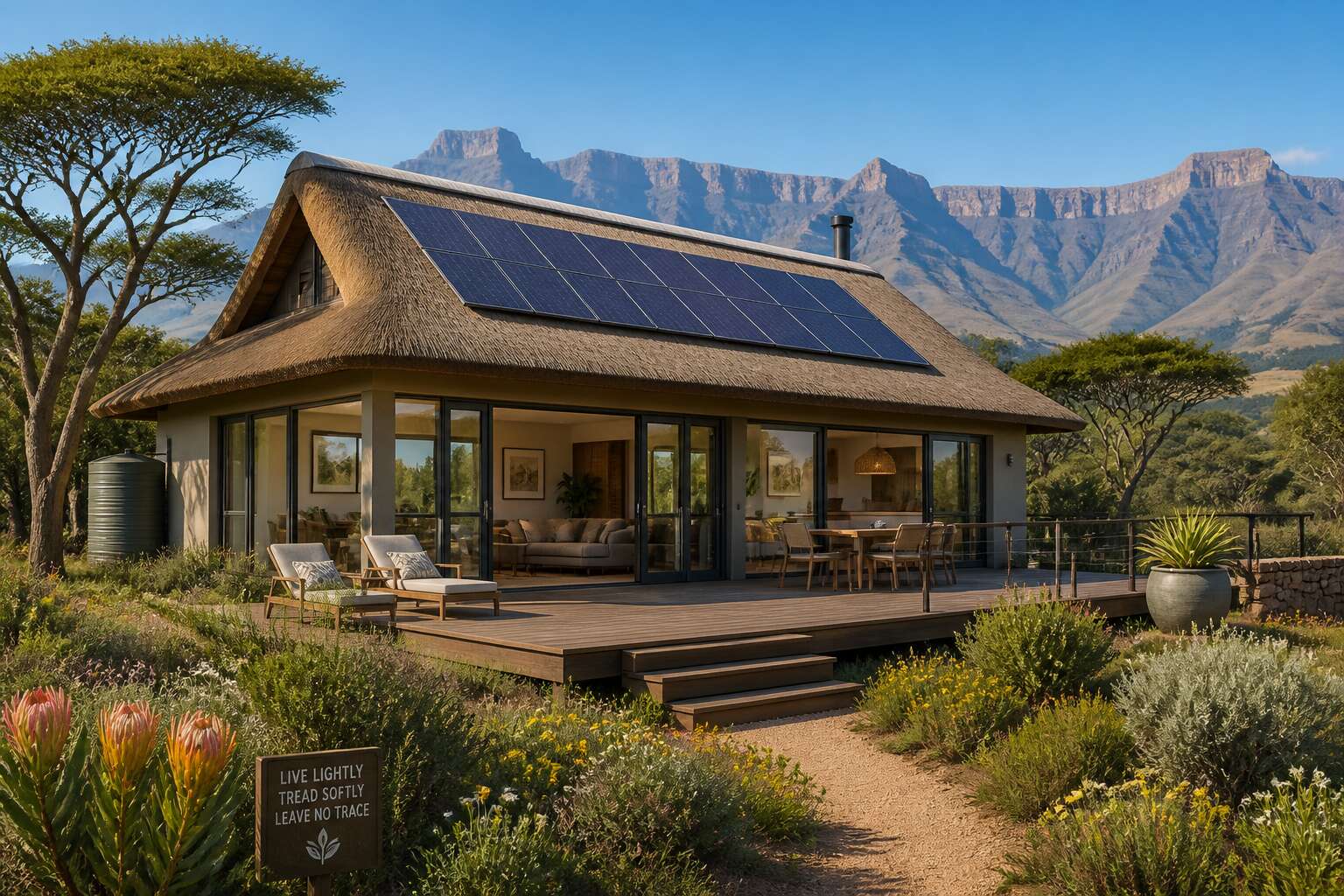
Within the scope of eco estate park homes south africa, the definition expands. These homes are engineered for efficiency, featuring solar readiness, rainwater harvesting, and insulated panels that deflect summer heat and hold warmth in winter. They coexist with the surrounding veld instead of flattening it.
The typical park home is:
- Constructed off site, then lifted into position
- Connected to permanent water and electricity services
- Governed by estate rules and a homeowners association
The result is a hybrid. Part house, part sustainable intervention, fully South African.
The Eco Estate Concept and Its Appeal
The veld does not ask for permission, yet so many estates force it into submission. Eco estate park homes south africa offer a different bargain, one where the dwelling bends to the landscape rather than the other way around. The appeal is not merely aesthetic, though there is a quiet beauty in watching a house settle into the grass without demanding the earth be scraped clean. The appeal is structural, financial, and deeply practical.
Consider the geometry of the place. A conventional suburb carves the land into identical squares, each one a statement of ownership. An eco estate works in negative space. The homes occupy the gaps between ancient trees, the natural drainage lines, the slopes that catch the evening breeze. This is not about living smaller. It is about living with less collateral damage.
– The buildings themselves generate their own power and harvest their own water
– The estates often share infrastructure, which lowers the individual cost of sustainable systems
– The surrounding green space acts as a buffer, creating privacy that a standard plot cannot offer
There is a certain irony in paying for the land you do not own, yet this is precisely the logic that makes these estates attainable. The monthly levy replaces the bond on the ground, and the savings go into the home itself. I think that is a fair trade, a transaction between permanence and possibility. The result is a home that stands as a testament to restraint, a structure that whispers instead of shouts. The true luxury here is not the square meterage, it is the silence between neighbours, the unbroken horizon, the knowledge that the estate will outlast the trend. That is the appeal, and it runs deeper than brick and mortar.
Park Homes Versus Traditional Estate Homes
The difference between a park home and a traditional estate home is measured in permanence. One asks you to build upon the earth, the other to borrow from it.
A conventional estate home arrives with a foundation poured deep into the soil. The park home sits lighter; when the veld reclaims its territory, there is less to mourn.
Consider the differences:
- The build time differs. A traditional home takes months; a park home arrives whole and is secured within days.
- The footprint differs. Conventional homes demand permanent foundations; park homes rest on supports that can be withdrawn.
- The future differs. A traditional estate home binds you to the plot; a park home can follow when the landscape changes.
There is a particular freedom in owning the structure and renting the ground. In eco estate park homes south africa, the home remains yours while the wild stays wild.
Environmental and Sustainability Benefits
Energy Efficiency and Renewable Energy Systems
In a country where the sun delivers over 2,500 hours of irradiance annually, park home residents are turning that abundance into tangible savings. Energy efficiency here is not an afterthought. It is engineered into the thermal envelope of each unit, with insulated walls, double glazing, and reflective roof coatings that keep interiors stable through Highveld winters and coastal humidity.
Renewable energy systems are becoming standard within eco estate park homes south africa. Many estates now integrate photovoltaic arrays directly into the design, paired with lithium battery storage. This setup cuts grid dependence during peak tariff hours and offers a quiet resilience during loadshedding. Solar water heaters, heat pumps, and smart inverters round out the typical installation.
The ecological dividend extends beyond the meter. Sharing a secured precinct reduces per household infrastructure loads, and communal solar microgrids are appearing in newer developments. A resident I spoke with near Stellenbosch described her monthly utility bill dropping by nearly 60% after switching to a solar hybrid system. That is ordinary people, managing extraordinary times. The result is a lifestyle that feels less vulnerable, both to rising energy prices and to an unreliable national grid.
Water Conservation and Off-Grid Living
South Africa’s water scarcity is measured in dam levels and municipal restrictions. Eco estate park homes south africa address this with water strategies embedded in their design philosophy.
Rainwater harvesting leads the approach. Rooftop gutters channel rainfall into storage tanks, with filtration systems preparing water for irrigation and laundry. Greywater recycling captures water from baths and basins, treating it for garden reuse. Some estates report reducing municipal water demand by up to 40%.
Water-wise landscaping reinforces these efforts. Indigenous plants flourish with minimal irrigation and support local biodiversity. Drip irrigation targets roots directly, cutting evaporation losses. I have walked through estates where gardens remain lush despite strict municipal limits.
Off-grid living in eco estate park homes south africa extends beyond water. Boreholes with solar pumps provide independent supply, maintaining flow during supply interruptions. Residents gain a measure of control over their daily needs.
Sustainable Building Materials and Design
The walls of eco estate park homes south africa tell a different story from conventional builds. Many developers specify rammed earth or recycled brick, materials that moderate indoor temperatures without mechanical intervention. I have seen ceilings lined with tongue and groove timber harvested from invasive species, a practical way to offset deforestation. These choices shrink the construction footprint and reduce long term upkeep costs.
Sustainable design extends beyond material selection. Orientation matters. Windows placed to catch prevailing summer breezes, shaded verandas that spare rooms from afternoon glare. Estate layouts preserve existing trees and natural drainage lines rather than flattening them.
Some estates go further:
- insulation panels made from recycled paper and textile fibres
- low VOC paints that keep indoor air healthier
- roofing systems designed for future solar retrofitting
These decisions are not cosmetic. They shape how a home performs over decades.
Green Landscaping and Biodiversity Protection
South Africa’s fynbos and grassland biomes are vanishing, but eco estate park homes south africa often reverse that trend. Developers plant indigenous species that need no irrigation. They leave dead wood for insects and birds. A neighbor’s garden becomes a habitat, not a lawn. I have watched estates thread paths through original bush, allowing porcupines and mongoose to move freely.
Buffer zones along streams filter runoff before it reaches wetlands. Some communities map their flora and share it with residents. The list of practical choices grows:
- Spekboom thickets for carbon sequestration
- Aloe rows that feed sunbirds in winter
- Rockeries built for dwarf chameleons
This biodiversity protects pollinators and soil health. It also gives residents a living connection to the land. The result is a park home that coexists with its environment, not one that fights it. That quiet coexistence defines the real value of eco estate park homes south africa.
Reducing Carbon Footprint in Everyday Living
Living in eco estate park homes south africa shrinks your daily carbon footprint through design and habit. Estates cluster homes, so short walks replace long drives. Shared infrastructure uses fewer resources per household. I have seen utility bills drop by half in the first year.
Everyday routines shift. Residents compost kitchen waste in shared facilities. They buy from local farmers who deliver to the estate gate. This cuts transport emissions and packaging waste.
- Clotheslines replace tumble dryers for most of the year
- Car sharing schemes operate inside the estate
- Solar heated water comes standard
These small choices compound. A household in an eco estate park homes south africa can cut annual emissions by nearly a third compared to a suburban home. The numbers come from residents who track utility bills and fuel receipts.
Lifestyle and Community Living
Modern Aesthetics and Comfort in Park Homes
Some nights, the shared fire pit becomes a gathering point. Within an eco estate park homes south africa, life moves at a slower rhythm. Neighbours know each other by name, not by car model. The architecture supports this bond with open-plan interiors that extend onto verandas. Modern aesthetics favour clean lines, natural wood, and soft neutrals, creating calm without sterility.
Comfort comes from thoughtful details, such as built-in window seats and ceiling fans that mimic a breeze. Residents personalise their spaces with indigenous art and potted succulents. Even the communal areas reflect this ethos. A typical estate offers:
- A shared vegetable patch for seasonal harvests
- A braai area designed for long conversations
- A tool library for weekend projects
This environment turns sustainable living into a daily social practice. The blend of privacy and connection feels natural! People often arrive as strangers and leave with a network of friends.
Shared Amenities and Recreation Facilities
Residents of eco estate park homes south africa often spend more time outdoors than indoors. Shared amenities shape daily life. The clubhouse hosts book swaps and board game evenings. A solar-heated pool stays busy from spring to autumn. Walking trails wind through protected fynbos. Bird hides offer quiet morning viewing.
Recreation here happens naturally:
– Padel courts for casual matches
– A cycling track with gentle gradients
– A dog park with shaded seating
These spaces encourage lingering. Neighbours share produce from the vegetable patch. Children learn to fish in the catch-and-release dam. The estate schedules weekly hikes and stargazing nights. Life feels sociable without being overwhelming.
Security and Estate Management Practices
Security in South Africa is not abstract. It is a daily consideration. Eco estate park homes south africa respond with layered systems. Biometric gates control entry. Patrol vehicles move through the streets around the clock. This vigilance translates into freedom. Residents linger outdoors. Children explore unsupervised. The estate becomes a refuge.
Estate management makes this possible. The professional team oversees:
- Security infrastructure and patrol scheduling
- Road and common area maintenance
- Municipal utility coordination
Levy statements arrive quarterly. Annual meetings review budgets openly. Residents vote on community projects. It is refreshingly democratic!
What impresses me most is the accountability. Management reports to the community. Committees oversee specific concerns. The systems work because residents participate.
Cultivating Community Spirit and Social Connection
Seventy percent of residents here celebrate birthdays with their neighbours. That statistic, from a community survey, captures the essence of life in this enclave. Social fabric is woven deliberately. Shared meals happen on patios. Impromptu braais become weekly rituals.
I’ve seen something rare: a neighbour asking another to water plants, then returning the favour with a bottle of wine. It’s simple reciprocity. The estates organize interest groups, from hiking clubs to board game nights. A sample of regular activities:
- Monthly sunset socials at the clubhouse
- Community vegetable garden rotations
- Book swaps and skill-sharing workshops
This atmosphere is common in eco estate park homes south africa. The design encourages proximity, not isolation. Walking paths lead to shared benches. Waste sorting stations become meeting points. Connection is not an afterthought. It is a design principle!
Financial Considerations and Investment Value
Price Ranges and Affordability
The financial logic behind eco estate park homes south africa often surprises first time buyers. Prices typically begin near R800,000 in developing regions and climb toward R2.5 million in prime coastal locations. That places them well beneath conventional freehold houses in comparable security estates. The real value, however, emerges through the levy structure, which bundles building insurance, maintenance, and shared infrastructure into one predictable monthly figure.
Buyers sidestep unpredictable repair bills because the estate manages roofing, structural elements, and common area upkeep.
Western Cape developments average R1.4 million for a finished unit.
Gauteng eco estates range from R900,000 to R1.8 million.
KwaZulu-Natal coastal options often include pre installed solar arrays within the purchase price.
Affordability extends beyond acquisition cost. Energy efficiency trims municipal bills, and water recycling lowers consumption charges. For many South Africans, the combination of environmental responsibility and financial prudence makes eco estate park homes south africa an increasingly rational entry point into secure property ownership.
Monthly Levies and Operational Costs
Monthly levies in eco estate park homes south africa typically range from R1,500 to R3,500 depending on the development’s footprint. This figure covers more than just security patrols and gate maintenance. It includes sinking funds for future roof replacements, external painting cycles, and road resurfacing. Owners avoid sudden assessments because the estate’s management committee budgets for these capital expenses annually.
Investment value improves because the estate maintains common areas to a high standard. Well kept entrance gardens and clean pedestrian pathways directly influence resale desirability. When comparing operational costs against a freehold property, buyers should account for individual insurance premiums and maintenance contracts they would otherwise pay separately. Bulk purchasing power often reduces these costs.
Consider what the levy includes:
- Building insurance on the structure
- Maintenance of shared solar inverters and water pumps
- Management fees for the estate administrator
That structure lets owners forecast their yearly housing expenses with greater accuracy.
Rental Potential and Resale Value
Rental potential in eco estate park homes south africa hinges on the estate’s managed infrastructure and the growing demand for sustainable living. Owners often achieve occupancy rates that outperform conventional properties, simply because the lifestyle resonates with a specific tenant profile. The rental yield is modest but stable, and the capital appreciation trajectory follows a similar curve.
Each factor influences buyer perception. When I evaluate these homes, the resale value is tied to the estate’s governance, not just the structure itself. That distinction matters.
A numbered list can illustrate the resale factors:
1. Estate reputation and environmental credibility.
2. Proximity to urban nodes while maintaining a secluded character.
3. The condition of the shared solar and water systems.
Financing and Purchasing Process
Financing eco estate park homes south africa requires a different lens than a standard property purchase. Banks often classify these homes as sectional title units, but the green infrastructure adds a valuation layer that can unsettle a first-time investor. In my experience, the bond amount tracks the replacement cost of the solar array and water recycling systems, not just the square meterage.
The purchasing process is where buyers stumble. A standard mortgage application fails when the estate holds the land under a leasehold structure. You need a bond originator who understands the financial mechanics of green estates.
- The title deed category determines whether the bank treats the home as immovable property.
- The levy allocation toward renewable energy upkeep signals the estate’s fiscal health.
- The bank’s policy on off-grid components can expand or contract your borrowing power.
A financier familiar with eco estate park homes south africa can structure a loan that bundles the unit and its utility infrastructure. This simplifies the capital outlay and makes the investment value clear.
Legal and Regulatory Aspects of Eco Park Estates
Zoning and Land-Use Regulations
Zoning approvals shape every eco estate park homes south africa project. Municipal schemes dictate where park homes may stand, how the land may be used, and what owners can build. Without the correct land-use rights, even the most sustainable development stalls before construction begins.
Several legal instruments apply. SPLUMA, the Subdivision of Agricultural Land Act, and local town planning schemes each play a role. Owners must also consider servitudes, building lines, and environmental authorisations under NEMA. A conveyancer or planning attorney should review the title deed before any purchase.
Common requirements include:
- Approval for the intended dwelling density
- Compliance with wetland or conservation buffers
- Registration of the homeowners association
Buyers should verify existing zoning directly at the deeds office. This prevents expensive surprises later. Understanding these rules turns a dream property into a secure investment.
Ownership Structures and Lease Agreements
In the realm of eco estate park homes south africa, ownership is rarely a simple freehold title. Developers often employ alternative structures to preserve green belts and comply with environmental restrictions. Buyers should understand the distinction before signing anything.
Common ownership models include:
- Sectional title with a shared common property
- Share block where a company owns the land
- Long-term leasehold on privately held land
Each structure carries distinct rights regarding resale, financing, and body corporate rules. Lease agreements in particular require scrutiny. A poorly drafted lease can limit improvements or allow unexpected levies. Lawyers familiar with eco estate park homes south africa should review every clause. This protects the buyer’s investment and ensures the estate’s environmental ethos remains legally binding.
Environmental Compliance and Green Certifications
Environmental compliance in eco estate park homes south africa is not optional. Municipal bylaws, water use licences and waste management regulations all apply. Developers must secure environmental authorisation before breaking ground. This process can take years. Buyers should verify that the estate’s approvals are current and transferable. Green certifications add another layer. The Green Building Council of South Africa offers tools like the Green Star SA rating. A certified estate signals genuine commitment rather than marketing spin. Common certification requirements include:
- Indigenous landscaping quotas
- Energy performance thresholds
- Stormwater management plans
An estate without these should raise questions. The legal framework for eco estate park homes south africa exists to protect both the environment and your investment.
Insurance and Liability Considerations
Insurance for eco estate park homes south africa demands closer scrutiny than most buyers expect. Standard home policies often miss the distinctive risks of eco estates. Thatched roofs, solar arrays and rainwater harvesting systems require specialised coverage. A conventional policy may not compensate for damage to these systems.
Liability extends beyond the dwelling. Shared infrastructure such as dams, walking trails and common gardens creates collective responsibility. The Homeowners Association usually carries insurance for communal areas. Owners must verify what this cover includes. I have seen estates where the HOA policy excluded the features that define eco living. Ask these questions before signing:
- Does the estate’s policy cover injuries on common property?
- Are water storage and solar installations included in the valuation?
- Who bears liability for damage caused by estate maintenance equipment?
Some estate management bodies require proof of personal liability cover before transfer is approved. Others rely on indemnity agreements with service providers. The legal framework governing eco estate park homes south africa continues to evolve, so insurance brokers familiar with eco estates are essential allies.
0 Comments