
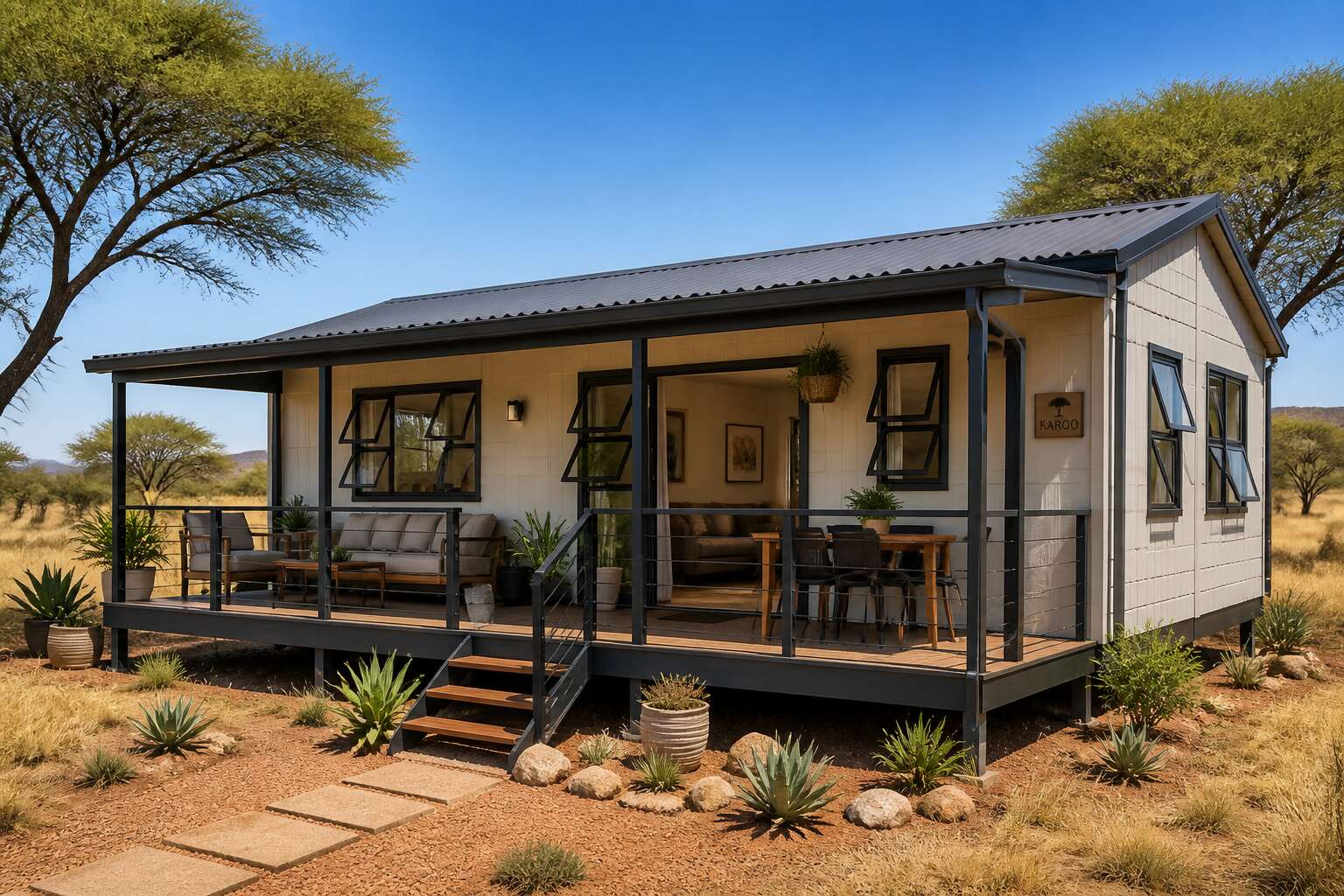
Understanding the Concept of Prefabricated Living in South Africa
What Are Mobile Homes and How Do They Differ From Traditional Houses
A house that arrives complete, wired, and ready for connection. That is the promise of prefabricated living, a process that flips the conventional building script on its head. Mobile homes are constructed inside a controlled factory environment, then transported to their final position. Traditional houses are assembled on site, brick by brick, while the weather and the availability of subcontractors dictate the pace.
This difference matters for your wallet and your patience. With a traditional build, you commit to a timeline that can stretch. With a manufactured unit, the structure arrives essentially finished. Consider the practical contrasts:
- Factory construction shields materials from rain and sun damage
- Site preparation and installation take days instead of months
- Quality checks happen during production, not during a final walkthrough
The result is that affordable mobile homes south africa deliver a level of certainty that standard construction rarely matches. You are paying for a product that exists before it reaches your property, not a promise of what might be built. For many buyers, that clarity is worth the shift in mindset.
The Growing Popularity of Prefabricated Housing in SA
I have watched prefabricated living in South Africa evolve from a niche concept to a genuine housing solution. The principle is straightforward. Your home is engineered, built, and finished in a controlled setting, then delivered as a complete unit. What surprises most buyers is how well these structures adapt to our climate and terrain. Coastal humidity, Highveld storms, even the Karoo’s temperature swings. Each build can be specified to handle them.
The growing popularity of prefabricated housing in SA comes from distinct advantages:
- Shorter delivery timelines than site-built projects
- Fixed pricing that survives the build process
- Engineered components tested before arrival
Municipal approval delays, contractor no-shows, and budget overruns have soured many on traditional builds. Prefabricated options restore predictability. Developers and first-time buyers are turning to this method, and the market responds. More suppliers means more competition, and that drives prices down. The result is that affordable mobile homes south africa are no longer a compromise. They are a deliberate choice.
Key Advantages of Choosing a Factory-Built Home
What makes prefabricated living distinctive is the shift in where the home takes shape. South African buyers often imagine a structure rising on site, but the factory floor changes that picture. Your affordable mobile homes south africa are assembled in a controlled environment, with inspection occurring under one roof before a single foundation is poured on your land.
The advantages of a factory-built home lie in precision. Walls are squared, joints are sealed, and materials are cut to exact measurements. This reduces waste and speeds up the final assembly, which directly influences the price you pay. When you choose this route, you are paying for the structure and the efficiency of the process.
Consider what this means for your project:
- Quality checks happen at every stage, catching defects early.
- Weather delays rarely interrupt production inside the factory.
This is the efficiency of prefabrication, where the ordinary act of buying a home becomes predictable.
Common Misconceptions About Mobile Homes
Few housing terms are as misunderstood in South Africa as the word “mobile.” Picture a caravan in the bushveld, and you have the old idea. The modern factory-built home is something else entirely. It is a permanent structure, engineered to last decades, built to SANS 10400 regulations, and settled on proper foundations like any masonry house.
Some confusion lingers because these homes can be moved. In practice, they rarely are. Once placed and anchored, they become fixed assets on your land.
Persistent misconceptions:
- They cannot be bonded or insured.
- They are only for rural areas.
- Quality is inferior to brick and mortar.
- They depreciate quickly.
None of these hold for a professionally built unit. Bonding options exist through specialised lenders. Quality depends on the manufacturer, not the construction method. That is why affordable mobile homes south africa have earned a legitimate place in the housing market.
Financial Considerations for Budget-Conscious Buyers
Price Ranges for Entry-Level Prefab Homes
Securing a bond for a conventional house in South Africa often requires a deposit north of R200,000, whereas an entry-level prefab home can be delivered and installed for under R350,000 all inclusive. For affordable mobile homes south africa, the base price typically spans from R180,000 to R320,000, but that figure excludes site work.
Buyers should anticipate additional costs for ground preparation, transport, and utility connections, easily adding 15% to 25%. Common line items include:
- Delivery logistics: R12,000 to R35,000
- Foundations: R25,000 to R50,000
- Plumbing and electrical connections: R8,000 to R20,000
These numbers shift with distance and soil type. A prudent purchaser requests itemised quotes from multiple suppliers before committing. The real financial merit of affordable mobile homes south africa lies in the lower monthly instalments, which leaves room in the household budget for maintenance and rates.
Hidden Costs Beyond the Purchase Price
Anyone who prices affordable mobile homes south africa soon learns that the brochure figure covers only a fraction of the true cost. The real expenditure sits beneath the surface, in site works and municipal requirements that no showroom display will mention.
Before a panel is lifted, owners face geotechnical surveys, zoning checks, and municipal approval fees that vary by district. Add ground preparation, and a R250,000 quote can climb past R310,000 without an interior upgrade.
Hidden costs that catch first time buyers off guard:
- Municipal application and inspection fees, R3,500 to R12,000
- Geotechnical soil analysis, R4,000 to R9,000
- Insurance during transport and installation
- Site security and temporary fencing
Each item demands cash, not bond financing. That distinction matters, because the monthly instalment is only half of the affordability equation. Water and sewer connections, electrical meter installation, and trenching labour arrive as separate invoices.
New vs Used Mobile Homes: Which Is More Cost-Effective?
Comparing new and used options changes the maths entirely. A pre-owned unit may carry a lower price tag, but factory warranties seldom transfer, and transport costs still apply. In my experience, the R80,000 saving on a used home often evaporates within three years of repairs! New builds, meanwhile, qualify for manufacturer guarantees and more flexible payment plans. Consider these figures:
- Used mobile home, R210,000 with R45,000 in immediate fixes
- New entry model, R265,000 with zero repair costs in year one
The gap narrows quickly. For affordable mobile homes south africa, the long term cost of ownership matters more than the initial sticker. Used units also require older plumbing and electrical systems, which municipal inspectors may reject outright. That hidden reality pushes many buyers toward new builds despite the higher deposit.
Comparing Mobile Homes to Renting and Brick Houses
Bond repayments on an entry-level brick house in South Africa now absorb roughly 30% of median household income. Renting offers flexibility but no equity, and annual escalations compound. For budget conscious buyers, affordable mobile homes south africa present a third path, one I have watched transform how families allocate their wages.
Consider the monthly comparison.
- A two bedroom brick house bond and levies runs to R8,400
- Renting the same property costs R7,200 with a 10% annual increase
- A financed mobile home on a serviced stand costs R4,900
The gap matters more over time than the deposit! Rental payments build someone else’s asset. A bond builds equity, but property transfer costs and bond registration fees consume the first year’s savings. The mobile home route keeps cash flow liquid, which matters when municipal rates and maintenance inflate faster than salaries.
Utilities and Maintenance Expenses
The true cost of affordable mobile homes south africa extends beyond the purchase price. Municipal utilities for a freestanding unit often run lower than those for brick structures, since smaller floor areas reduce consumption. Geysers sized for compact spaces, energy efficient lighting, and proper insulation come standard in modern factory built units.
Maintenance expense follows a predictable pattern. Steel frames and treated timber resist termite damage. Cladding requires repainting every seven to ten years. Roof sheeting, correctly installed, lasts decades.
- Monthly water and electricity averaged R1,850 for a two bedroom unit in Gauteng
- Sewage and refuse removal fees vary by municipality, often R400 to R600
- Annual maintenance reserves sit around R6,000
These figures shift the affordability equation. The financing cost of affordable mobile homes south africa remains the fixed point; utilities and upkeep scale with usage. Buyers who inspect the energy rating before purchase avoid surprises.
Financing and Insurance Options in South Africa
Government Housing Subsidies and Grants
The quiet anxiety of homeownership often isn’t about the monthly bond, but the fear of a sudden, unplanned expense. For many South Africans, the gap between aspiration and a stable foundation is financial. This is where the scaffolding of state support and smart insurance becomes essential for those seeking affordable mobile homes south africa.
Government schemes are not mythical promises, they are tangible pathways. The FLISP subsidy, now integrated into the broader housing subsidy framework, provides a sliding scale of financial assistance for first-time buyers. You might qualify for a grant that directly reduces your purchase price, a sum that can mean the difference between a dream and a deposit. Eligibility hinges on your household income, which must fall below a certain threshold, and the fact that you have not previously owned property.
Your journey towards securing a factory-built dwelling requires specific documentation and patience, but the reward is a debt load that is manageable.
– Your South African ID and your spouse’s, if applicable.
– Proof of income, such as recent payslips or bank statements.
– A formal offer to purchase for the specific unit.
– A sworn affidavit confirming you have not owned a home before.
Once the structure is yours, the emotional burden shifts to protecting it. Standard homeowners’ insurance is often unsuitable for units on wheels or those without brick foundations. You need specialized insurers who understand that your asset is modular and movable. These policies cover the structure against fire, theft, and storm damage, while also offering liability coverage if someone is injured on your property. It is a different kind of peace, one that acknowledges your home’s unique nature and your own need for security in an unpredictable world.
Rent-to-Own and Lease Options
Rent-to-own contracts are a lifeline for buyers who cannot secure a bank bond. You pay a monthly rental premium, part of which becomes a future deposit. The lease typically runs two to five years. At the end, you buy at a pre-agreed price. This works well for affordable mobile homes south africa because the unit itself is collateral. No third party financing means less paperwork. However, these agreements are not standardized. A lawyer should review the fine print.
Lease options give you the right to buy later without the obligation. You pay an option fee upfront. That fee secures the price and a timeframe. Monthly rent runs higher, but a portion goes toward the purchase. Insurance stays essential under both structures. Land and unit ownership can split between landlord and tenant, so clarify who carries coverage. For affordable mobile homes south africa, a broker can tailor a policy to fit.
Insurance Requirements and Providers
In South Africa, insurance requirements for mobile homes differ sharply from brick houses. Banks usually demand building cover on bonded property, but many affordable mobile homes south africa are bought without a bond. That leaves the insurance decision to you.
Short-term insurers such as OUTsurance, Santam, and MiWay all offer options, yet not every policy automatically covers a factory-built unit. You must confirm the provider understands the construction type. Some insurers classify mobile homes as temporary structures, which changes both premiums and payout conditions.
Common coverage needs include:
- Structural damage to the unit itself
- Contents coverage for furniture and appliances
- Liability protection if someone is hurt on the property
A broker can bundle these and compare providers quickly. Premiums stay lower when you insure replacement value only, not the land beneath the home. For affordable mobile homes south africa, a named policy with the unit listed as the insured asset offers the clearest protection.
Where to Find and Purchase Affordable Mobile Homes
Top Reputable Manufacturers in South Africa
Scouring the byways of the Free State or the dusty margins of the Northern Cape reveals a quiet truth: the most reliable paths to affordable mobile homes south africa are not found in storefronts but in factory yards. Reputable manufacturers like Ideal Homes and Sun Space have built their names on precision and honesty, offering units that endure the Highveld’s wrath. A short list of trusted builders includes:
- Ideal Homes, known for custom floor plans.
- Sun Space, preferred for coastal climates.
- Aluhab, for robust steel structures.
Purchasing directly from these factories, rather than through middlemen, often secures better pricing and warranty support. Inspect the assembly line, not the showroom. Ask for a full specification sheet before you sign. The right manufacturer will answer without hesitation, because their reputation depends on the integrity of every screw and seam.
Online Marketplaces and Classified Listings
The factory yard remains the most certain ground for a durable purchase, but the digital town square now rivals it for sheer volume of choice. For many buyers, the hunt for affordable mobile homes south africa begins in the quieter corners of the internet, where private sellers and liquidators list units that never see a dealership lot. These marketplaces offer a different kind of transparency.
The challenge on these platforms is not a lack of options, but a surplus of noise. A well-tuned search query is your first line of defence, yet the real work begins with the seller. A private owner often has a full maintenance log, which is a detail that a showroom brochure cannot provide. Prices occasionally dip below factory minimums when the seller needs a quick sale or the unit has been relocated once already.
To narrow your search, consider these listing sources:
– Private Property and Property24, which host dedicated sections for prefabricated units.
– Facebook groups specific to South African housing, where sellers often post before formal listings.
– Auction houses in Gauteng and the Western Cape, which clear repossessed or returned stock.
The key is to filter by location. Transporting a unit from KwaZulu-Natal to the Free State can add significant cost, so treat the search radius as the first filter. The best deals are frequently found within 50 kilometres of the final site. A responsive seller who answers questions about the foundation and electrical wiring is worth more than a slick advert with professional photography. Online scouting simply confirms the market’s reach. The concrete decision still happens when you stand inside a unit, run your hand along the skirting boards, and check the vents for rust. That step verifies the digital promise in person, which is the only way to purchase with confidence.
Dealerships and Showgrounds
Walking a showground beats scrolling through photos, and I say that as someone who has done both. Dealerships in Gauteng and the Western Cape keep multiple units under one roof. Compare wall thickness, roof seams, and door alignment without booking separate visits. Factory tolerances vary between manufacturers even at similar prices. Buyers looking for affordable mobile homes south africa decide here.
A reputable dealer will walk you through the delivery process, including foundation requirements and municipal approvals. They often handle transport logistics, which saves you from coordinating a crane hire. These details merit attention:
- The displayed unit matches the contracted model.
- Factory warranty terms transfer to the new owner.
- Delivery and installation fees appear in writing.
Showgrounds put the product physically in front of you. They remain the most direct route to affordable mobile homes south africa because you inspect the exact construction first.
Auctions and Bank Repossessions
Auctions remain a well kept secret for buyers hunting affordable mobile homes south africa. Banks and private lenders repossess units when owners default on financing agreements. These properties move through formal auction houses, often at prices below market value because the seller wants a swift resolution. The bidding room has a distinct energy, and you need to decide quickly. But the savings can be substantial.
The auction process rewards preparation. Attend a few sales before bidding on anything. Watch how the auctioneer runs the room and how other buyers signal their offers. You will notice that repossessed units vary widely in condition, so inspect the lot list beforehand. Most auction houses publish catalogues online, with viewing times scheduled a few days before the sale.
Here is what you should check before raising your paddle:
– The original purchase price versus the current reserve price
– Whether the unit has been weatherproofed since repossession
– The age of the roof and the integrity of the floor joists
– Any outstanding municipal or levies fees attached to the property
Bank repossessions offer a direct route to affordable mobile homes south africa because the lender’s priority is recovering the outstanding loan, not maximising profit. You might find a unit with solid bones and dated fittings. A coat of paint and new fixtures can transform it into a comfortable home. The trade off is that you buy the unit in its current state, with no warranty and no dealer support. But if you have a sharp eye and a steady hand, the financial upside is real.
Once the hammer falls, the paperwork moves quickly. You will need a deposit immediately, often 10% of the purchase price, with the balance due within 30 days. Arrange financing before the auction, because banks will not approve a loan on a unit you have not secured. Some auction houses offer their own bridging finance, but the interest rates tend to be steep. Do the maths before you commit.
The after sale process involves the same registration steps as any property transfer. The auction house handles the transfer of ownership documents. You arrange transport and installation yourself, which means factoring in crane hire and foundation costs. These expenses might push the final price higher than a dealership deal, so run the numbers carefully. If the numbers still work, an auction could place an affordable mobile homes south africa package in your name for less than you imagined.
What to Inspect Before Making an Offer
Private sellers remain an overlooked route to affordable mobile homes south africa. Some owners list only on community notice boards or through speaking to friends in the same park. A quick conversation with the caretaker at a residential estate can reveal units that never reach public listings. These sellers often want a fast transfer, so the negotiated price can sit well below asking.
When you find a candidate, inspect everything before you commit. Look at the interior wall joints, the sealant around windows, and the condition of the skirting. Run the taps and flush the toilet to confirm water pressure. Test the stove and geyser connections. The roof panels deserve particular attention, because leaks here create expensive rot elsewhere. Take a slow second walkthrough at a different time of day.
Negotiating the Best Price
A motivated seller can drop the asking price by tens of thousands of rand, especially when the unit has been on the market for months. Start inside the park itself. Caretakers often know about owners who want to sell quietly. A direct approach to these sellers can bypass agent fees.
- Ask how long the unit has been vacant
- Request the latest water and electricity statements
- Find out if the seller already bought another home
Then negotiate with those facts in hand. If the roof needs replacing, mention it. If the geyser is old, use that to justify a lower price. The goal is to secure affordable mobile homes south africa without overpaying. Cash buyers hold real power here, so set your terms clearly.
Customization and Delivery Logistics
Standard Floor Plans vs Custom Designs
Choosing between a standard floor plan and a custom design shapes both cost and timeline. Standard plans from reputable manufacturers offer predictable pricing and faster delivery, since materials and assembly sequences are already refined. Custom designs allow you to adjust room layouts, but every alteration introduces new variables into the production schedule. For buyers seeking affordable mobile homes south africa, standard plans often unlock the best value per square metre.
Delivery logistics also differ. A factory built unit travels on a specialised trailer, so site access matters. Consider these constraints:
– Width and height restrictions on local roads
– Turning radius at the entrance to your property
– Clearance for overhead cables and trees
A custom design may require additional engineering checks, which extends lead times. Those delays can increase holding costs, such as storage fees or temporary accommodation. Weighing these factors early protects your budget and keeps the project moving. Affordable mobile homes south africa often come from standard lines, so the savings justify staying within a proven layout.
Choosing the Right Size and Layout
Choosing the right size and layout starts long before the foundation is poured. It starts at the boundary of your property. I have seen buyers fixate on square metres while ignoring the simple fact that a house must survive the journey to its own site. For affordable mobile homes south africa, this is where the real decision lives.
Delivery logistics determine what you can actually own. A factory built unit arrives on a specialised trailer, so you need to think in terms of clearance. The most practical checkpoints to map out:
1. Height of overhead cables and tree branches along your street
2. Width restrictions on local and municipal roads
3. Turning radius at your driveway gate
4. Slope and surface condition of the final access path
A wider custom layout often demands escort vehicles and special route approvals. Those add weeks and tens of thousands of rand. Meanwhile, standard width designs for affordable mobile homes south africa typically use existing transport permits, which cuts lead time and protects your budget. Choose a floor plan that matches your land, not just your wish list. A narrower footprint with a smart interior beats a spacious shell that cannot be delivered. That is the trade-off nobody mentions, but it shapes everything.
Transportation and Site Preparation
Customization changes the delivery equation. A wider veranda or an extra dormer alters more than the look; it alters the transport profile. For affordable mobile homes south africa, every design choice carries a logistics consequence that only becomes real on delivery day.
Site preparation is a separate discipline. Start with soil assessment and access path grading. The delivery truck needs a level approach and firm ground beneath its wheels. A muddy driveway after the first proper rain can stall installation for days. Before you finalise any plans, walk the route:
- Gate width versus the trailer’s outer mirrors
- Turning circle for a twelve metre rig
- Overhead clearance for the roofline peak
Transport permits take time of their own. A standard width unit slips into the existing approval system, but a custom footprint demands fresh route surveys. That paperwork can add weeks to the timeline. Match your customisation to the land, and the whole sequence stays manageable.
Installation and Setup Timelines
Once the transport profile is settled, the installation timeline becomes the next variable. For affordable mobile homes south africa, the gap between factory completion and move-in day depends on how many modules need joining on site. A single wide unit can sit on its foundation within a day. A double wide or custom configuration takes longer.
Delivery logistics also shape the sequence. The crane crew, the foundation team and the finishing contractors all work around the same timeframe. A late arrival shifts every subsequent step, and weather interrupts the schedule more often than manufacturing delays. In my experience, the finishing crew often juggles several sites at once, so a one day slippage ripples through their calendar.
The typical setup sequence runs like this:
- Foundation anchors and leveling jacks
- Module alignment and joining
- Roof sealing and exterior cladding
- Plumbing, electrical and gas connections
Most installs complete in three to seven days, with custom homes at the upper end.
Legal and Regulatory Considerations
Municipal Zoning and Permits
Zoning bylaws determine whether your affordable mobile homes south africa project proceeds. I have seen buyers secure financing, arrange transport, and only then discover their chosen erf is zoned for brick structures exclusively. Municipal approval does not automatically follow from land ownership. You need written permission for a temporary residential structure, and some councils require public notice. Permit requirements vary across provinces. For instance, Cape Town asks for structural engineer reports, while rural municipalities may only demand a simple application form.
- Check title deed for restrictive servitudes
- Confirm zoning certificate matches intended use
- Submit site plans before purchasing
Skip these steps and you might pay legal fees that exceed the home itself.
Owning Land vs Renting a Lot in a Park
The decision between purchasing a plot of land and renting a space within a dedicated park shapes every legal and financial step of your journey with affordable mobile homes south africa. Owning the land provides a sense of permanence and builds equity, but it places the full burden of zoning compliance, municipal services, and property taxes squarely on your shoulders. Renting a lot in a licensed park often simplifies the initial setup, yet it introduces a complex layer of landlord agreements and park rules that govern everything from exterior paint colors to the type of skirting you can install.
Your rights and responsibilities shift dramatically depending on that choice. When you own the ground, you are effectively a property developer in miniature. This means you handle the connection fees for water and electricity, and you manage the installation of a foundation that meets local building codes. Conversely, renting a lot usually means you are subject to the park’s operational license and the Consumer Protection Act, which dictates how and when your rental contract can be terminated.
Consider the key differences clearly:
– Land Ownership: Grants you title deed rights, but requires you to secure separate financing for the land and the home itself.
– Park Rental: Offers a lower entry cost, but subjects you to monthly levies and the rules of the park’s homeowners’ association.
– Value Appreciation: Land typically increases in value over time, while the mobile home itself usually depreciates.
The legal protection you receive hinges on a careful reading of your specific contract. A rental agreement in a park is usually short-term and requires you to adhere to the park’s internal management rules. An ownership agreement involves a full property transfer and registration with the Deeds Office. Before committing to either route, verify the park’s zoning designation or the land’s title deed restrictions. The path you choose will determine your rights to privacy, your ability to make structural changes, and your long-term financial security in the realm of affordable mobile homes south africa.
Contracts and Warranty Protection
Reading a contract for affordable mobile homes south africa feels like deciphering a map drawn in invisible ink, until you learn the key. The Consumer Protection Act gives you a statutory warranty that your factory built home meets safety and quality standards. Builders often add their own warranty, covering structural defects for up to five years. However, these protections only hold if you register the warranty with the manufacturer within thirty days of installation.
Scrutinize every clause regarding transfer of risk, especially during transport and assembly. A home that arrives with bent roof trusses demands an immediate claim, not a delayed phone call after the rainy season. Common contract elements to verify:
– The exact deposit schedule and penalty for late payments.
– The procedure for warranty dispute resolution.
– Whether installation defects fall under the manufacturer’s liability or the installer’s.
Resale Value and Depreciation
In the realm of affordable mobile homes south africa, the legal scaffolding is as crucial as the steel frame beneath your feet. Your ownership rights hinge on classification quirks, since a unit registered as movable property follows a different regulatory path than one permanently affixed to a foundation. Municipal by-laws can shift unexpectedly, and a township that welcomes prefabricated structures today might enforce stricter zoning tomorrow, affecting everything from permissible extensions to occupancy limits. The legal identity of your home, whether it is an asset or a chattel, determines your obligations for rates, transfer duties, and even estate planning.
Depreciation is a relentless companion for anyone entering this market. Unlike conventional brick houses that often appreciate with time, a mobile structure typically loses value faster in its first decade. The resale market relies on scrupulous upkeep and impeccable documentation of every certification and service record. Prospective buyers are savvier than ever, and they will discount your asking price severely if you cannot prove compliance with building regulations or trace the maintenance history. Several factors directly influence the eventual resale figure:
– The original manufacturer’s reputation and build quality.
– The remaining validity of any structural warranties.
– Whether the home sits on permanently owned land or within a leased park arrangement.
Your legal leverage in a future sale narrows considerably if you have not archived approval permits and installation certificates. A home that was professionally installed and inspected will always outperform an equivalent unit with a murky provenance in the resale market. The regulatory landscape, therefore, shapes the financial trajectory of your investment. You might find a niche exception where a custom-designed unit on owned farmland appreciates, but those scenarios are rare. For the vast majority, the depreciation curve is steady, so treat your mobile home as a functional dwelling first, not a speculative asset. The only true defense against financial erosion is meticulous record-keeping and a clear understanding of your rights under current provincial legislation.

0 Comments