
Understanding the Life Rights Model
What Are Life Rights?
Imagine paying a single sum for a home and never facing bond repayments again. That is the essence of the life rights model, a concept becoming more common in South African retirement living. When you acquire life rights, you purchase the right to occupy a park home for the remainder of your life. The underlying land stays with the developer.
For many, life rights park homes South Africa offers a sensible alternative to conventional ownership. A once-off capital payment secures your residence, while a monthly levy covers maintenance, security, and shared amenities. I have watched retirees choose this model for its clarity and predictability.
Typical features include:
– Lifetime occupancy rights
– No transfer duties on purchase
– Limited resale value to the developer
The arrangement prioritises security of tenure over capital growth, a trade-off many accept willingly!
How Life Rights Differ from Ownership
The difference between life rights and conventional ownership is subtle yet profound. Ownership grants title to the structure and the land beneath it. Life rights grant something more durable: the certainty of home.
In South Africa, this distinction carries consequences. A freehold buyer inherits maintenance burdens, municipal rates, and resale market volatility. Life rights park homes South Africa operate on another logic entirely. The resident holds a personal right, not a real right. The developer retains title to the land and the home itself.
This legal nuance alters the financial arrangement:
- No bond repayments on the single capital sum
- No transfer duties upon entry
- No exposure to property market fluctuations
Capital does not chase appreciation. It purchases peace. For retirees who embrace this trade-off, life rights park homes South Africa offer something ownership often cannot: permanence without anxiety.
The Role of Park Homes in Life Rights
The life rights model operates on a simple exchange. A retiree pays a single capital premium and receives the right to reside in a home for life. No bond. No transfer duty. The monthly levy covers the essentials:
- Routine upkeep of the home exterior
- Security and access control
- Maintenance of communal gardens and roads
This structure removes the unpredictability that weighs on conventional homeowners.
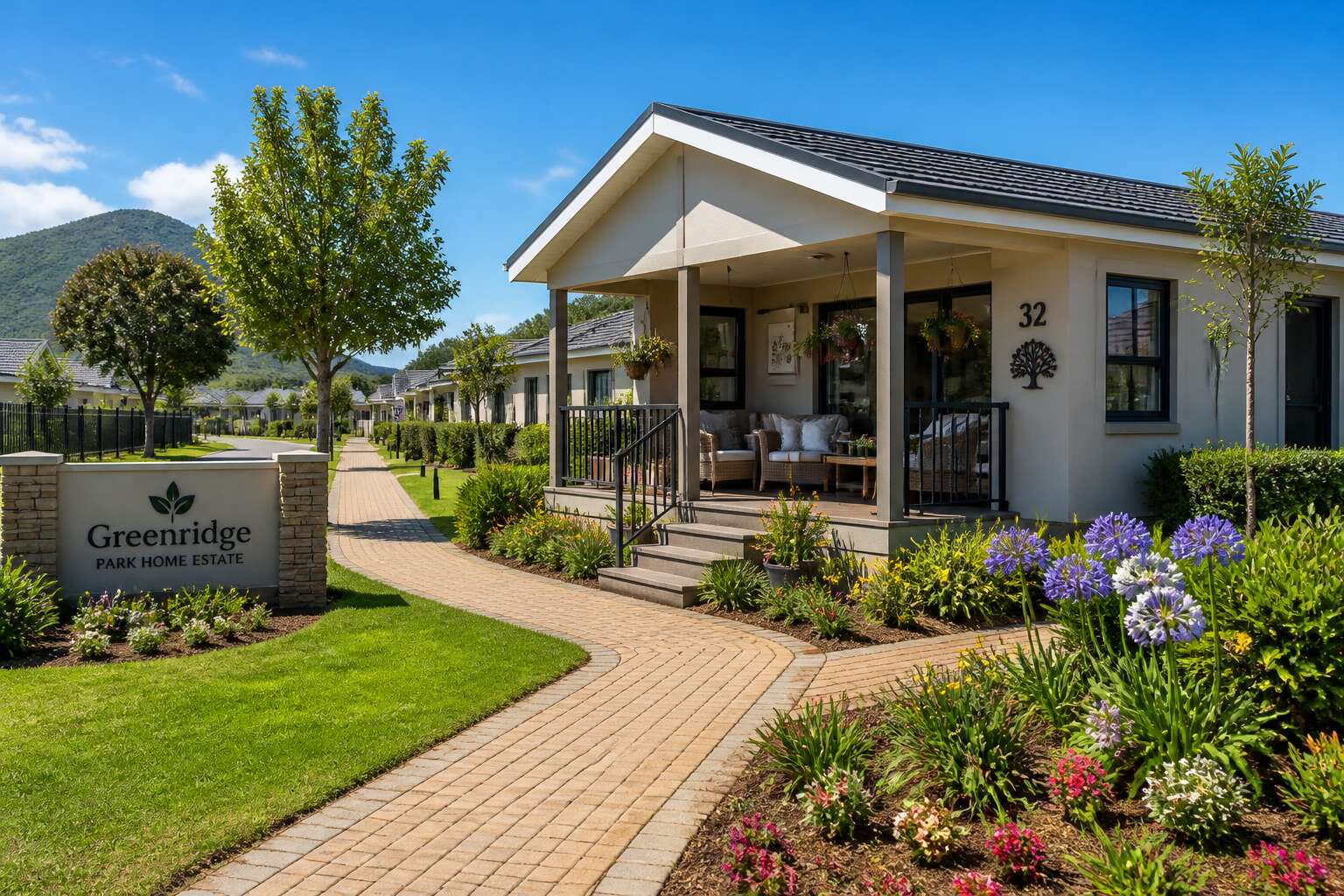
Park homes fit this model. They are single-level residences clustered within managed estates. The developer retains responsibility for infrastructure, landscaping, and communal spaces. Residents trade administrative burden for a predictable monthly cost.
The arrangement rewards a specific mindset. Life rights park homes South Africa appeal to retirees who buy certainty, and I respect that clarity. The capital outlay secures a lifetime of occupancy, not a speculative asset. Every rand spent returns value in stability and freedom from upkeep.
Advantages of Choosing a Park Home with Life Rights
Affordability and Cost Structure
Many retirees hold substantial wealth in property they cannot easily sell. Life rights park homes south africa offer a way to access that value without giving up the comfort of home.
The affordability comes from a clear cost structure. You pay for the dwelling and its right of use, not the freehold land beneath it. That distinction lowers the entry price considerably!
I have seen retirees free up enough capital to cover years of travel. Consider what the monthly commitment covers:
- Security, garden services, and external maintenance in a single levy
- No bond registration fees or transfer duties on the life right itself
- Municipal rates and structural insurance handled by the park owner
The result is a predictable financial footprint. Life rights park homes south africa turn estate ownership into a streamlined monthly arrangement, which makes long term budgeting far easier.
Maintenance-Free Living
Forget the Saturday morning lawnmower. In life rights park homes south africa, the park operator takes responsibility for all external upkeep.
Your duty is reduced to the interior of your home. The operator handles the following:
- Garden and lawn maintenance
- Exterior painting and roof repairs
- Security and access control
- Building insurance and municipal rates
The result is a home that remains secure and well maintained without your intervention. You can travel, pursue hobbies, or simply rest. This mode of living protects your independence because you retain control over the dwelling while the heavy tasks fall to someone else.
Access to Community and Amenities
Consider this: the quantity of solitude in a typical retirement is rarely a choice. A well designed park home layout places common areas within a short walk of every dwelling. This design encourages regular contact with neighbours, which counters isolation. You gain a social network without the effort of maintaining a separate club membership.
The amenities deserve attention. Typical offerings include the following:
- Shared clubhouses with schedules of events
- Swimming pools and maintained pathways
- Emergency response systems in each unit
These facilities give you reasons to leave your home daily, and they do it without added personal cost. You can attend a gardening class in the morning, play cards in the afternoon, and never worry about upkeep. I have seen how the community environment of life rights park homes south africa directly benefits anyone tired of isolated living!
Security and Peace of Mind
Crime statistics in South Africa create constant anxiety for older adults. Park home communities in this country offer a deliberate solution through layered security systems. You gain perimeter fencing, biometric access, and patrols that operate around the clock. This environment transforms daily living.
Consider the practical advantages:
- Controlled entry points that limit unknown visitors
- Emergency response buttons inside every unit
- On site security personnel who know residents by name
These measures exist because the park home model invests in your protection. My visits to these communities confirm this. Residents leave doors unlocked, walk paths after dark, and sleep without reviewing home security procedures. That peace of mind is a direct benefit of life rights park homes south africa. This purchase delivers a home and the absence of fear itself.
Financial and Legal Implications in South Africa
Purchase Price and Monthly Levies
The purchase price for life rights park homes south africa usually lands between 70% and 80% of a comparable freehold property. That discount buys the right to occupy, not the bricks and mortar. The legal agreement therefore carries real weight.
The monthly levy is where the practical economics show up. It typically bundles:
- Security and access control
- Building and garden maintenance
- Water and refuse removal
- Reserve fund contributions
That levy is a contractual obligation. It escalates annually, often in line with the Consumer Price Index.
Before signing, request three years of levy statements. They reveal how well the estate is managed. The purchase price gets you in, but the monthly levies keep you living there.
Contractual Terms and Exit Strategies
Life rights park homes south africa are legal covenants, not title deeds. The contract creates a personal right to occupy, not a transferable property interest. It defines the term of occupation, each party’s duties, and the conditions that terminate the right.
Exit strategies deserve particular scrutiny. When a resident leaves, the estate often holds the first right to repurchase. The buyback amount may follow a formula, usually the initial purchase price adjusted by the Consumer Price Index. No guaranteed resale value exists.
Death also triggers exit. The right passes to the nominated beneficiary, with management’s approval. Without clear contractual terms, the family may receive less than expected.
Estate Planning and Inheritance Issues
Life rights complicate estate planning in South Africa. Unlike a freehold home, a life right is a personal contract. It does not automatically transfer to heirs. Your executor must navigate the specific terms of the agreement. The value for inheritance tax purposes may be far lower than the purchase price. This surprises many families.
Consider your nominee carefully. If the contract names a beneficiary, that person assumes the right after your death. Management must approve. Without a nomination, the right falls into your deceased estate. This delays the process. Your will should reference the life rights park homes south africa contract explicitly. Otherwise, your family faces uncertainty.
- Review the nomination clause each year.
- Inform your executor about the buyback formula.
- Obtain legal advice to align your will with the contract.
The financial implications depend on your foresight. Proper documentation prevents inheritance disputes.
Consumer Protection Regulations
The Consumer Protection Act quietly reshapes the legal landscape for life rights park homes south africa. I have seen buyers assume they hold no recourse once they sign, yet the Act provides a layer of protection. It governs unfair contract terms and imposes obligations on the park operator. This matters because a life right is a personal contract, not property.
Consider these implications:
- The Act requires transparent disclosure of all costs before you commit.
- It allows you to cancel within a cooling off period in certain circumstances.
- It prohibits clauses that waive your rights unfairly.
These regulations add weight to your position. Without them, the agreement favors the developer entirely. The financial risk falls on you. Now the law shifts that balance.
Evaluating Life Rights Park Home Developments
Location and Lifestyle Considerations
The old joke about location being everything in property turns serious when the property is a life rights park home south africa. The garden will bloom, but the road outside the gate decides your quality of life. If the nearest hospital is an hour away, or the grandchildren live in another province, the appeal fades quickly.
Consider the rhythm of your week. Do you want to be near a golf course, a library, or the church where you have sat for thirty years? Some estates sit close to private clinics and shopping centres. Others demand a car journey for a loaf of bread. Ask yourself:
- How far to my doctor?
- Can I reach family easily?
- Does this suburb match my pace?
Brochures show a perfect Tuesday. The real test is an ordinary one. Residents who linger at the gate reveal more than any floor plan.
Assessing the Developer’s Reputation
The developer’s reputation determines whether a life rights park homes south africa agreement holds its promises. A polished sales centre tells you little about who will honour exit clauses in a decade. The evidence sits in company registrations, audited financials, and a portfolio of completed projects.
Visit an older estate they built. In my experience, residents speak candidly about levy increases and maintenance delays once you mention you are researching the developer. Their answers confirm or contradict the marketing narrative.
- Property Practitioners Regulatory Authority registration status.
- A portfolio of completed estates built more than five years ago.
- Tenure in the life rights sector, not merely general property development.
Developers who sell and vanish leave residents holding the risk. Diligence before signing is the only protection.
Understanding the Transfer Process
Evaluating a life rights development demands a weekday visit, not a launch weekend. Check the condition of communal facilities, the water pressure, and the paving. These small signals indicate how the body corporate manages funds. A pristine sales centre means little if the older phases show neglect.
Understanding the transfer process matters equally. Life rights park homes south africa do not move through the deeds office. The seller cedes their rights to you, and the developer approves the cession. A clearance certificate confirms no outstanding levies, and the developer’s written consent formalises your occupancy. You then sign a fresh life rights agreement that governs your tenure. An attorney familiar with this niche should review the cession documents, because the standard property transfer machinery does not apply.
Due Diligence and Documentation
A life rights purchase is a paper trail exercise, and the documents whisper truths the sales brochure never will. When evaluating life rights park homes south africa, you are not buying walls, you are buying tenure backed by cessions and certificates. The cession agreement is the fulcrum, but the supporting paperwork reveals the actual health of the scheme.
Ask for the following before you commit:
- Audited financial statements from the past three years
- Minutes from the last two body corporate meetings
- The approved site plan and municipal clearance certificates
- A schedule of outstanding levies for the specific unit
Scan those minutes for arguments about unpaid levies or contractor squabbles. Financial statements with shrinking reserves are a warning sign hiding in plain sight. Every signature on these documents carries weight, so verify each one rather than trusting the developer’s assurance. In life rights park homes south africa, the documentation is your only shield against a future no one can promise.
Addressing Concerns and Common Questions
Is It a Good Investment?
Many people ask me if life rights park homes south africa are a sound investment. My answer depends on what you mean by worth. You are not buying bricks for resale. You are purchasing a way of living that frees your capital. That shift changes every calculation.
Residents often worry about losing their initial payment. Yet contractual terms, as we saw earlier, usually protect that figure. The real risk is personal, not financial. This arrangement demands trust in the community and developer for decades. That trust is built on transparency.
Honest concerns come down to a few questions:
- Does the monthly levy cover true maintenance?
- Is the developer stable for future obligations?
- Can you adapt to shared living?
If yes, these arrangements offer security with dignity.
What Happens When the Right Ends?
When the right ends, the exit is usually less dramatic than a soap opera, though the paperwork can rival one. In life rights park homes south africa, the contract dictates what happens next. If the resident passes away or moves on, the life right reverts to the developer or owner. The estate receives the initial payment, minus any agreed deductions, as per the contract. Some agreements include a resale clause that determines how much returns to you.
A few things typically occur:
– The property is inspected for damage beyond normal wear.
– Outstanding levies are settled from the payout.
– The balance goes to the nominated beneficiary or estate.
No auction, no estate agent, no weekend open houses. The process is designed to be clean and predictable. That predictability is exactly why so many people choose life rights park homes south africa. You are not leaving a headache for your family; you are leaving a clear procedure.
Can Family Members Continue Occupancy?
The question of family occupancy after a life right holder passes away is a frequent worry. In life rights park homes south africa, the right is personal to the holder. It does not pass to heirs the way a title deed would, and family members cannot simply move in and inherit the right to stay.
Most contracts do grant a brief grace period for family to arrange the estate. The mechanics vary by developer, but they generally follow a set structure:
- A 30 to 90 day window to vacate the property
- No automatic occupancy for adult children or relatives
- A possible survivorship clause for a spouse, if negotiated up front
That last point deserves attention. If both partners are not named initially, the surviving spouse may have no claim at all. Asking for this clause before signing protects the partner and removes the panic of a forced move. In life rights park homes south africa, the written answer to these questions is what separates a dignified exit from a scramble.
Tips for Negotiating a Fair Agreement
The first morning in a life rights park home South Africa arrives with a particular stillness. Not the silence of isolation, but the calm of a place that has already decided to take care of you. The dew clings to the grass in neat rows, the bird calls come from a nearby thorn tree, and the kettle on your counter feels like it belongs to someone who has finally exhaled. This is the quiet magic of choosing a life rights park home South Africa offers, a lifestyle that trades the weight of ownership for the lightness of belonging.
You walk from your bedroom to the small patio, coffee in hand, and notice how the light filters through the louvre blades of the pergola. The garden requires no weekend battle. The lawn has a schedule, the flower beds have a caretaker, and the roof over your head has a maintenance team who arrive before you even notice a leak. In a life rights park home South Africa, the days unfold without the urgent demands that once accompanied a freehold title. There is no bond to service, no rates to chase, no insurance renewal to puzzle over. The monthly levy covers the essentials, and the contract explains exactly what that means, so you can spend your energy on the things that actually matter.
The community here is not a collection of neighbours but a constellation of stories. Retired professors trade books at the communal library. Former nurses run a weekly soup kitchen from the clubhouse. On Friday afternoons, the braai area fills with laughter and the smell of boerewors, and someone always brings an extra bag of charcoal. The life rights park home South Africa model encourages this kind of social fabric because it attracts people who have chosen to live deliberately, not because they were forced to sell. They arrive with open hands, ready to exchange decades of responsibility for a simpler rhythm.
What surprises many newcomers is how quickly the landscape becomes familiar. Whether you settle in the Winelands with their rolling vines, along the Garden Route with its indigenous forests, or on the Highveld with its dramatic thunderclouds, the location shapes your days. A life rights park home South Africa setting often places you near nature reserves, golf courses, or coastal paths. You find yourself walking more, breathing deeper, and noticing the subtle shift of seasons that you missed while trapped in traffic or tied to a repairman’s schedule. The magic is not in the architecture, though the homes are charming. It is in the way the environment invites you to participate rather than merely occupy.
You also discover a different relationship with time. In a conventional property, your weekends belong to the gutters, the geyser, the cracked paving. Here, those tasks evaporate. The estate manager handles the urgent calls. The garden service appears like clockwork. Your afternoons stretch into unhurried conversations on the veranda, or a slow drive to a nearby farmers market. The life rights park home South Africa concept frees you from the tyranny of upkeep, and that freedom becomes the most luxurious amenity of all.
Of course, this lifestyle requires a shift in perspective. You are not buying walls and floorboards. You are buying a right to occupy, a right that is personal and tied to your lifetime. This distinction, once understood, becomes a source of relief rather than concern. The money you invest in a life rights park home South Africa buys security, predictability, and a community that wraps around you like a favourite blanket. The contract spells out the exit terms, the refund structure, and the conditions of occupancy. When you read those pages with an open mind, you realise that you are not losing an asset. You are gaining a sanctuary.
The people who thrive here share a certain disposition. They have already raised families, built careers, and navigated the storms of life. Now they want a harbour. The life rights park home South Africa lifestyle offers that harbour without the anchor of constant maintenance. You can lock your door and travel for months, knowing that the estate is secure and your garden will greet you on your return. You can host grandchildren without worrying about the safety of a steep staircase or an unsecured pool. You can ask for help with a broken tap and receive it with a smile, because that is the nature of the arrangement.
There is also an unexpected beauty in the shared spaces. The dining hall becomes a stage for birthdays, memorials, and impromptu concerts. The walking trail becomes a meeting point for early risers. The vegetable garden produces more tomatoes than anyone can eat, so the surplus lands on the communal table. These moments of exchange, of giving and receiving, create a texture of life that is difficult to replicate in a standalone house. In a life rights park home South Africa, you are never truly alone unless you choose to be, and even then, the silence is companionable.
As the sun sets and the lights of the estate flicker on, you stand at your kitchen window and watch a neighbour wave from her porch. You wave back, not out of politeness, but out of genuine recognition. This is the secret that no brochure can fully convey. The magic of a life rights park home South Africa is not in the brickwork or the landscaping. It is in the quiet knowledge that you have finally found a place where the days are your own, the burdens are shared, and the horizon is wide open. You did not just move into a park home. You moved into a life that has room to breathe.


0 Comments